Take a Breath: Outages, Online Hype, and What’s Actually Real
A Microsoft outage, an air traffic control ground stop, and banks going down, all in one week. Social media has been on fire, and some people are cashing in on the fear. The fear isn’t crazy, but it grows when you don’t have the facts. Here’s how to keep your head and stay focused on what matters.
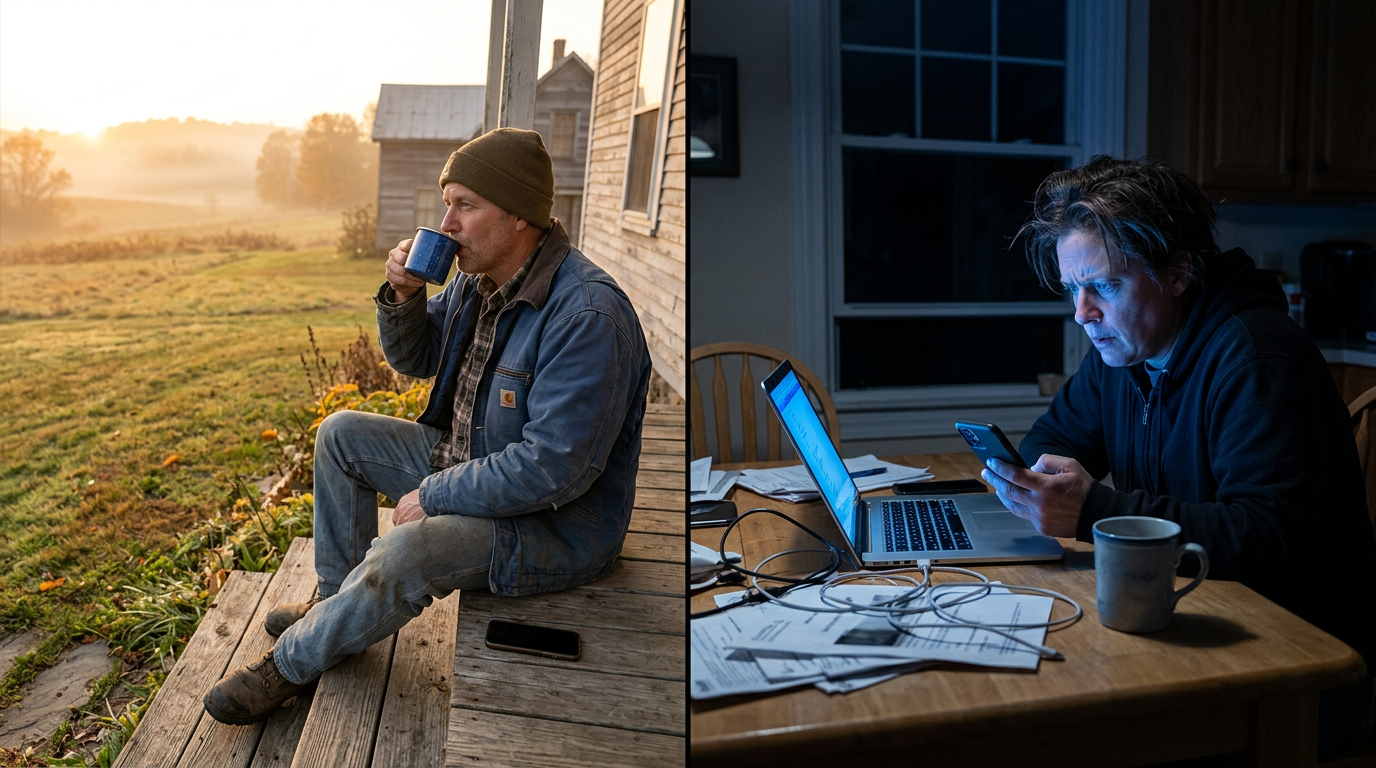
It’s been a week. First Microsoft 365 went down and took Outlook, Teams, and OneDrive with it. Then on November 13 the FAA stopped every departing flight in the country for a few hours. And yesterday Chase customers couldn’t log in to their bank, with trouble spreading to other big banks.
If you spent any time on social media, you saw the reaction. “It’s starting.” “This is a coordinated attack.” “Pull your money out now.” “The grid goes down next week.” Videos with red arrows and dramatic music. Countdown clocks. And more than a few links to buy something.
I want to talk about that. Not to tell you nothing matters, but to help you sort out what’s real, what isn’t, and what you should actually do about it.
What actually happened
Let’s start with the facts, because they’re less dramatic than the headlines but more useful.
- Microsoft 365: a big chunk of Microsoft’s services went down for people around the world. I covered it in The Microsoft 365 Outage and How Few Companies Really Run the Internet.
- Air traffic control: on the afternoon of November 13, the FAA ordered a nationwide ground stop on departing flights. Reports trace it to a newly installed network router during an equipment upgrade in Arkansas that flooded the FAA’s older network with traffic. Flights resumed that evening, thousands were cancelled or delayed, and every plane in the air landed safely. The FAA said there was no sign of a cyberattack.
- Banking: yesterday Chase customers couldn’t log in online or in the app. Chase blamed a software bug in its own systems, not an attack. Other banks reported delays as the problem rippled out. I wrote about it in Locked Out of Your Own Money.
Three different problems at three different kinds of companies. As far as anyone has reported, all three were technical failures: a bad update, a bad router, a software bug. Not hackers, not a plot, not the start of the end.
That doesn’t mean they don’t matter. It means they matter for a different reason than the internet is telling you.
The fear is real. The context is missing.
I’m not going to tell anybody their fear is silly. When you can’t get into your bank account, or your flight home gets grounded, or your work email disappears, it’s natural to feel uneasy. And when it happens three times in one week, it’s natural to wonder if something bigger is going on.
But fear grows fastest when you don’t have the full picture. A ten-second clip of a departures board full of red “CANCELLED” tells you something happened. It doesn’t tell you why, how long it lasted, or that everyone landed safely. Your mind fills in the blanks, and it usually fills them in with the worst case.
That’s the gap the hype lives in.
Some people are cashing in on your fear
Here’s the part that bothers me. Every time something like this happens, a certain crowd shows up to profit from it.
- Accounts that post scary takes because fear gets clicks, shares, and followers.
- Sellers pushing “last chance” deals on gear, food, or metals with a countdown timer.
- Scammers sending fake “your bank account is locked, click here” texts during the outage.
- People claiming they saw it coming and promising to tell you what’s next, for a subscription.
Ask yourself one simple question about anything you see online: who benefits if I panic? If the answer is the person who posted it, slow down.
I’ve talked before about tuning out the hype before you panic buy. The same rule applies to information. Panic buying information is just as costly as panic buying toilet paper. It costs you sleep, peace, and focus.
Nobody can predict the next one
I’ll be straight with you. I don’t know when the next cyberattack, outage, or disaster is coming. I can’t predict it, and neither can anyone else, no matter how confident they sound or how many followers they have.
If someone tells you exactly what is going to happen and when, that alone is a reason to be skeptical. Real experts talk about chances and risks. Hype artists talk about dates.
And here’s the good news: you don’t need to predict it. That’s the whole point of preparing. A prepared household doesn’t have to know what’s coming, because it’s ready for a lot of different things.
Off balance is the goal
I believe a lot of the misinformation flying around is meant to keep people off balance. When you’re scared and scrolling, you’re not thinking clearly. You’re not spending time with your family, doing your job well, fixing that leaky faucet, or checking on your neighbor. You’re reacting.
Whether it comes from someone trying to sell you something, someone chasing clicks, or someone who just wants people divided and distracted, the result is the same. You lose focus on the things you can actually control.
Staying calm isn’t ignoring the problem. It’s refusing to let somebody else decide what you worry about.
What to do instead
When the next wave of scary posts hits your feed, try this:
- Take a deep breath. Seriously. Put the phone face down for five minutes before you react to anything.
- Go to the source. Check what the company, the FAA, your bank, or your local emergency management office actually said, not what someone said they said.
- Wait for the second report. The first story is often wrong. A few hours later the facts are usually much clearer.
- Reach out to people you trust in the prepping community. Call or text someone level-headed you know personally, not a stranger with a big following.
- Check your own basics. Do you have some cash on hand, water, food, medicine, and a way to stay in touch? If yes, you’re already ahead.
- Make one small improvement. Instead of buying in a panic, pick one gap and fill it calmly this week.
- Get back to your life. Go to work, eat dinner with your family, and enjoy your weekend. That’s what all of this is for.
Lean on your people
One of the best things about the prepping community is the people in it. The folks who have been doing this a long time have seen plenty of scary headlines come and go. They tend to be the calmest people in the room, because they’ve already done the work.
If you feel yourself getting wound up, talk to one of them. Ask what they’re seeing and what they’re doing. Most of the time the answer will be something like “Not much. Checked my supplies, topped off the truck, went back to work.” That’s a good answer.
And if you’re one of those level-headed folks, check on the newer people around you. A calm voice goes a long way.
Focus on what matters
This week was a reminder that the systems we depend on can break, sometimes all at once. That’s worth paying attention to. But it’s a reason to prepare, not a reason to panic.
You can’t control the next outage. You can control whether your household has what it needs, whether you get your information from good sources, and whether you let fear run your day.
So take a breath. Turn off the noise. Call someone you trust. Then get back to the things that really matter: your family, your work, your community, and your own peace of mind. No fear, no gatekeeping. Just common sense.