Locked Out of Your Own Money: Today’s Bank Outage
Chase customers couldn’t log in today, and the ripple effects reached other big banks. Nobody lost a dime, but for a few hours a lot of people couldn’t see or move their own money. Here’s what happened and how to make sure a bank’s bad day isn’t yours.
A few days ago it was Microsoft. Yesterday I wrote about keeping cash on hand. Today, right on cue, the banks had trouble.
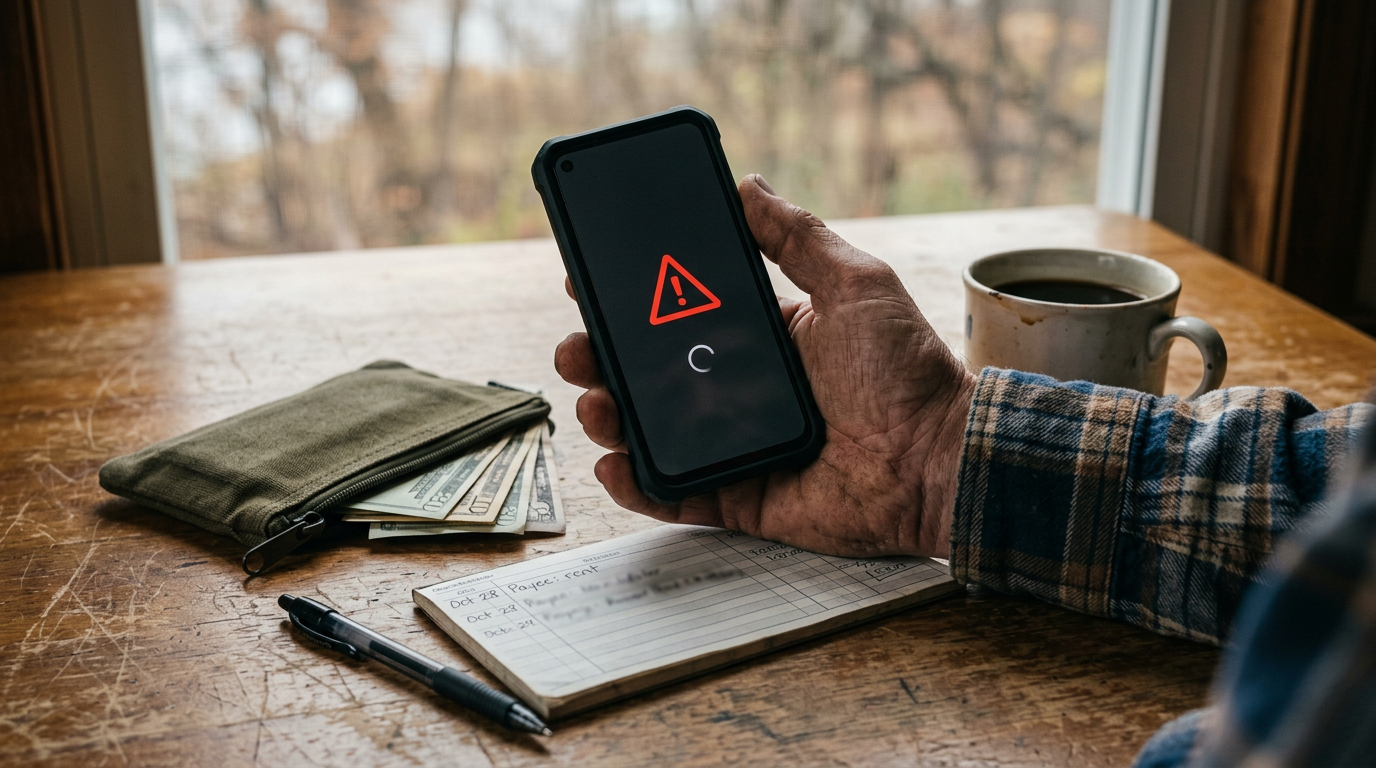
On November 16, JPMorgan Chase customers reported they couldn’t log in to online banking or the mobile app. Chase said the cause was a software bug in its own hardware systems, not a cyberattack, and expected it to be fixed by the end of the day.
It didn’t stay at Chase, either. Customers at other big banks, including Bank of America, Wells Fargo, and U.S. Bank, reported delays and trouble getting into their accounts. Zelle stayed up, but payments to and from the affected banks were slow.
Nobody lost money. That’s not the point.
Let me be clear: your money didn’t go anywhere. It was sitting right where it always is. You just couldn’t get to it or see it for a while.
For most people that’s an annoyance. But think about who it isn’t an annoyance for. The person whose rent is due today. The family that needs to send money to a kid at college. The small business owner who has to make payroll. The person sitting at a gas pump with a card that suddenly won’t go through.
When everything runs through an app, “I can’t log in” can quickly become “I can’t pay.”
Why one bank’s problem spreads
Banks don’t work alone. Money moves between them all day through shared payment systems, and a lot of them rely on the same few technology companies. When one big bank stumbles, payments going to and from it stall, and customers at other banks feel it too.
It’s the same lesson as the Microsoft 365 outage: a lot of daily life rests on a handful of systems most of us never think about until they stop.
What to do today, and before the next one
None of this takes much money or effort:
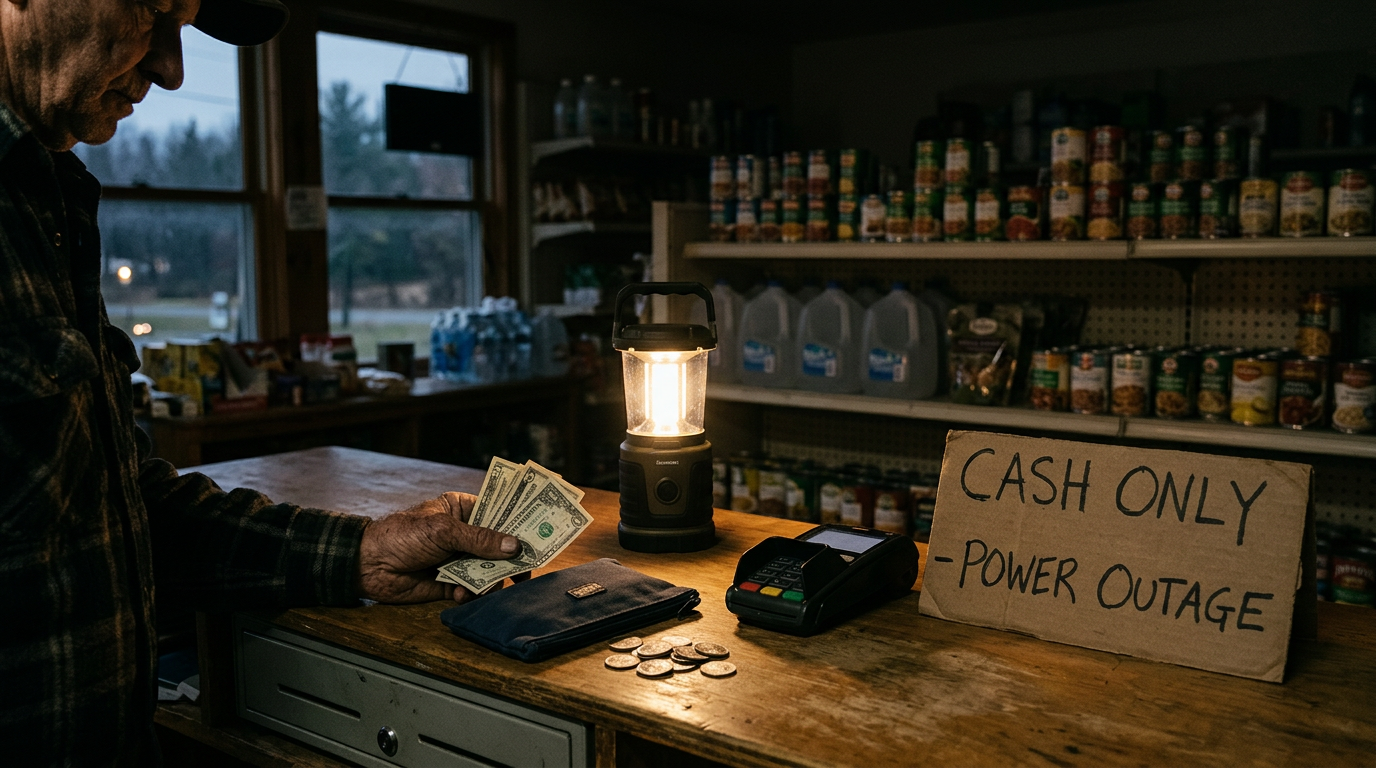
- Keep emergency cash at home, mostly in small bills. I covered how much and how to store it in Cash Is King When the Card Reader Goes Dark.
- Have accounts at two different banks, ideally one big bank and one local bank or credit union. If one is down, you can still pay from the other.
- Carry more than one way to pay: a debit card and a credit card from different banks.
- Don’t pay bills on the due date. Pay a few days early so an outage doesn’t turn into a late fee.
- Write down your bank’s customer service number and your account numbers and keep them somewhere safe and offline, not just in the app.
- Know your recent balance. A quick note after big purchases, or an old-fashioned check register, means you aren’t flying blind when the app is down.
Watch out for scammers
Every outage brings out scammers. They send texts and emails that look like they’re from your bank, saying something like “Your account is locked, click here to restore access.”
Don’t click. Your bank won’t ask for your password or a code by text or phone. If you’re worried, call the number on the back of your card or go straight to the bank’s real website or app.
Know first, and have a plan
The people who got through today without stress were the ones who already had a little cash, a second way to pay, and a plan. That’s what preparedness is. Not fear, just a few simple steps taken ahead of time.
If you want help with that, our partner BePrepared Solutions is running a promotion right now called Fortress 90. You get 90 free days of both BeAware, which sends real-time alerts for your address about things like outages, severe weather, and emergencies, and BeReady, which builds a personalized emergency plan for your household. It’s not a raffle. Repost our Fortress 90 post on X or Instagram, get your personal code by email, and activate by November 30.
A card is required, but if you cancel any time before day 90 you pay nothing; it’s $22.78 a month after that. Open to U.S. residents 18 and over, one per person, while coupons last. I wrote up all the details in Fortress 90: Ninety Free Days to Get Your Household Ready, or you can claim your 90 days here.
Full disclosure, as always: BePrepared Solutions partners with the show. Today was a small, harmless drill. Use it to find your weak spots before the next one. No fear, no gatekeeping. Just common sense.