Cash Is King When the Card Reader Goes Dark
Power outages, payment-system failures, and network outages can shut down card readers and ATMs in an instant. Here’s why every household should keep a little emergency cash at home, how much to keep, and how to store it sensibly.
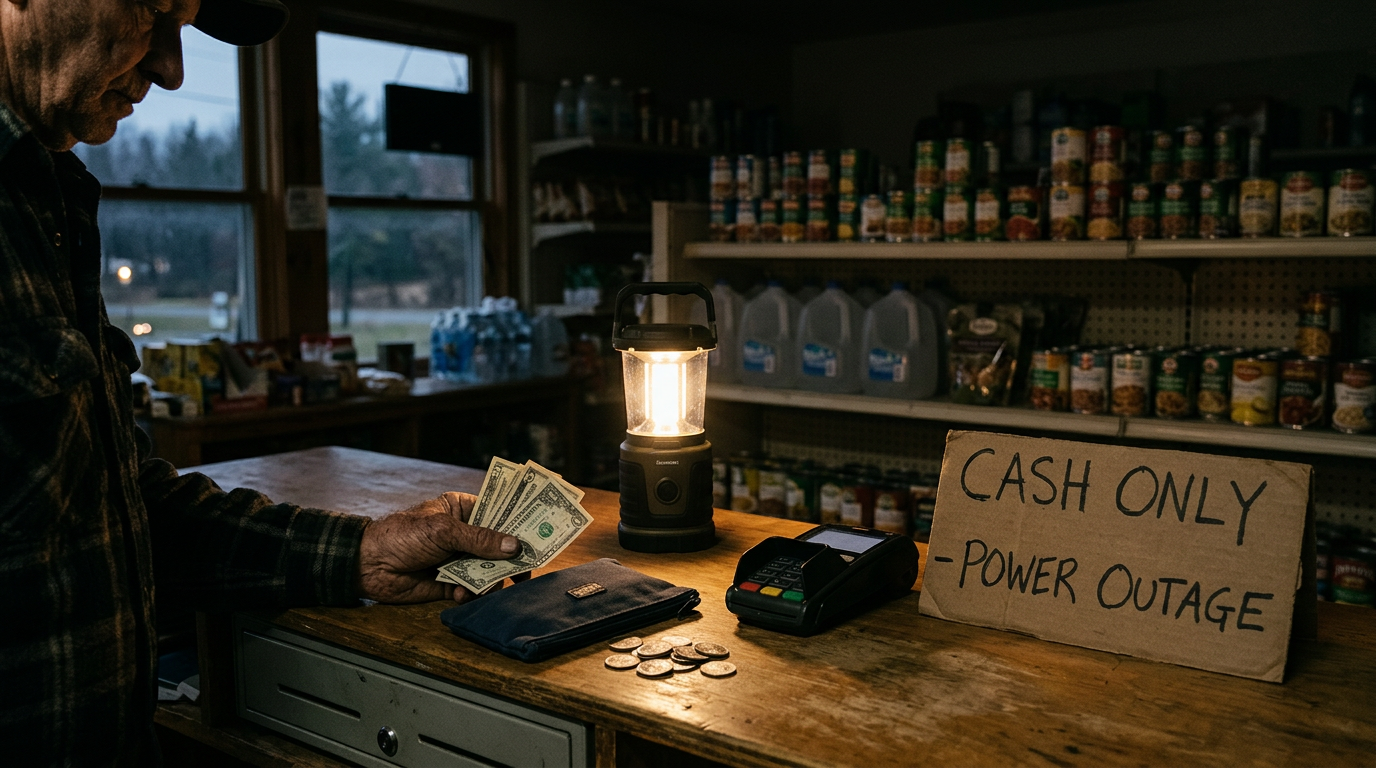
Picture this. The power’s been out for a few hours. You drive to the one store in town with its doors open, grab water, batteries, and something for supper, and walk up to the register. The clerk points at a cardboard sign: “Cash only.”
You reach for your wallet and find a debit card, a credit card, and maybe a crumpled five. The ATM across the street is dark too.
It happens more often than people think. And it’s one of the easiest problems in all of preparedness to fix.
Why cards and ATMs fail
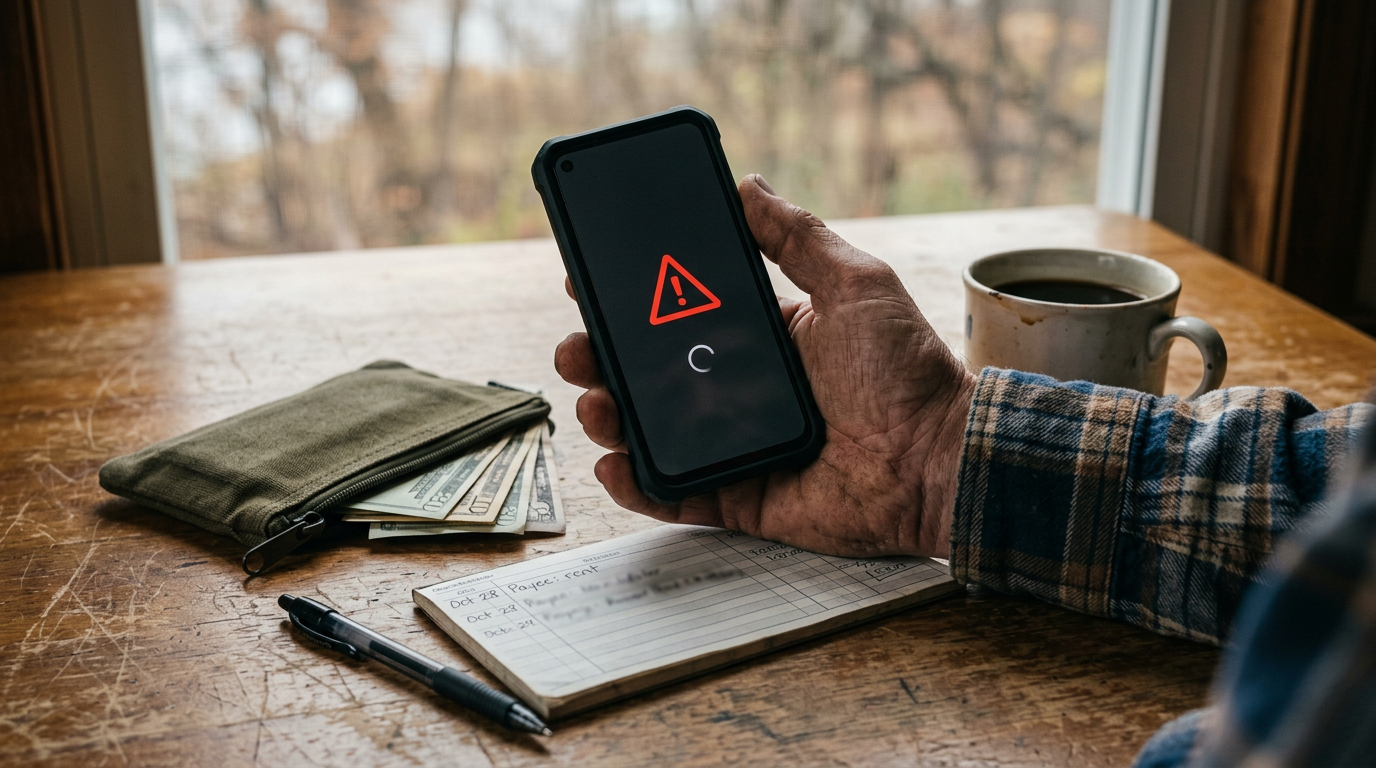
Paying with a card feels instant and simple, but every swipe depends on a chain of things working at once: power at the store, a working internet or phone connection, the payment processor, and your bank’s systems. Break any link and the sale stops.
- Power outages: no power means no register, no card reader, and no ATM. Storms, ice, and wildfire shutoffs can last for days.
- Network outages: if the store’s internet or the cell network is down, the card reader can’t reach the bank, even if the lights are on.
- Payment-system failures: card processors and banks have outages too. When one goes down, it can hit thousands of stores at once.
- Wider tech failures: as we saw with the Microsoft 365 outage, a lot of daily life runs through a handful of companies. When one stumbles, the effects spread.
- Runs on cash: when a disaster is coming, everybody heads to the ATM at once, and machines run empty fast.
How much to keep
There’s no magic number, and you don’t need to stuff a mattress. A good starting point is enough to cover your household’s basic needs for a few days to a week without a card: gas, food, water, medicine, and maybe a night in a motel if you have to leave.
For a lot of families, that lands somewhere in the few-hundred-dollar range. Build it slowly if you need to. Twenty dollars set aside each payday adds up faster than you’d think, and any amount is better than none.
Small bills matter
This is the part people get wrong. A stack of hundreds is not much use when the register can’t open and nobody can make change.
- Keep mostly small bills: ones, fives, tens, and twenties.
- Add a roll or two of quarters for vending machines, laundromats, and air pumps.
- Plan to pay close to exact. In an outage, plenty of stores won’t have change to give.
How to store it
Keep it simple and keep it safe:
- Split it up. Keep most at home, and a smaller amount in your vehicle or bug-out bag.
- Use a waterproof pouch or zip-top bag so a leak or flood doesn’t ruin it.
- Pick a spot that isn’t obvious. The sock drawer and the freezer are the first places a burglar looks.
- A small fireproof, waterproof safe is a good upgrade if you can swing it.
- Tell one other trusted adult in the house where it is, so it helps the family even if you aren’t home.
- Don’t brag about it. The whole point of the gray man is that nobody knows what you have.
Treat it like insurance, not spending money
The hardest part of emergency cash isn’t saving it. It’s not spending it. Pizza night is not an emergency.
One trick that helps: put a note in the pouch listing what it’s for, like gas, groceries, medicine, and a motel. If you do have to use it, write down what you took and refill it as soon as things are back to normal.
Check it once or twice a year when you rotate your other supplies. Make sure it’s still there, still dry, and still enough for your household.
Pair it with knowing first
Cash helps most when you get to the store before the shelves are empty and the line is out the door. That’s where awareness comes in. When you know a storm or an outage is coming before everybody else, you have time to fill the tank, pick up supplies, and top off your cash while the ATMs still work.
Keep a little cash on hand, mostly in small bills, stored somewhere safe and dry. It’s cheap, it’s simple, and on the day the card reader goes dark, you’ll be the one walking out with what you need. No fear, no gatekeeping. Just common sense.