My CBRN Preparedness Is Lacking. Here’s My Plan to Fix It in 2027.
After years of prepping, I’ll admit it: chemical, biological, radiological, and nuclear preparedness is my weak spot. So that’s my New Year’s resolution. Here’s the honest, one-step-at-a-time plan I’m following, and you’re welcome to come along.
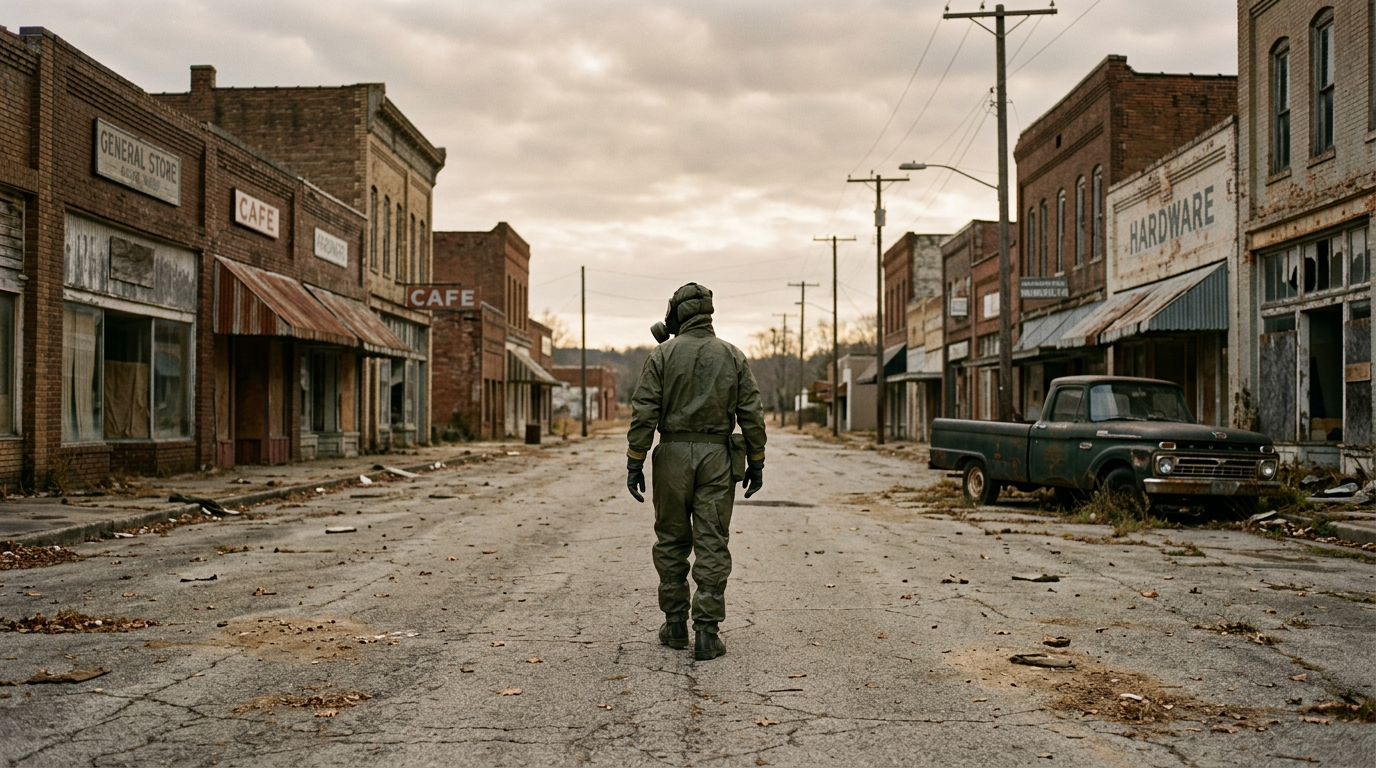
I’m going to start this one with a confession. I’ve been doing this a long time. My pantry is in good shape, my family knows where to meet, I’ve got a get home bag in the truck, and I can talk your ear off about water storage. But if you asked me what I’d do if a train full of chemicals derailed two miles from my house, or if a radiation alert came across my phone, my honest answer would be, “I’d figure it out.”
That’s not a plan. That’s hope wearing a plan’s clothes.
So my New Year’s resolution for 2027 is to fix my CBRN preparedness. CBRN stands for chemical, biological, radiological, and nuclear. I’m not an expert, and I’m not going to pretend to be one. I’m a regular guy who spent 26 years as a cop and realized he has a gap. This article is my plan for closing it, and I’ll be reporting back as I go.
Why most of us skip this
I think a lot of preppers skip CBRN for the same reason I did. It feels like movie stuff. When you hear “nuclear” or “chemical attack,” your mind goes straight to mushroom clouds and men in hazmat suits, and it all feels so big that there’s no point in trying.
The other reason is that this corner of preparedness is full of the two things I can’t stand: fear-mongering and gatekeeping. Somebody’s always trying to sell you a $600 gas mask, and somebody else is always telling you that unless you have a lead-lined bunker, you’re already dead. Both of those make regular people tune out.
Here’s what changed my mind. When I actually started reading about this, I found that most real CBRN preparedness comes down to two common-sense skills: knowing what’s near you, and knowing when to get inside and stay there. That’s it. Nobody needs a bunker to learn those.
The likely stuff, not the scary stuff
Think back to February 2023 and the train derailment in East Palestine, Ohio. Regular families in a small town woke up to a chemical emergency they never saw coming. That’s the kind of CBRN event most of us are actually likely to face. Not a war. A tanker truck on the interstate, a leak at a plant, or a rail car on the tracks behind the neighborhood.
Same with biological. We all just lived through a pandemic. Most of us learned the hard way that we didn’t have enough masks, enough cleaning supplies, or a plan for taking care of a sick family member at home.
Radiological and nuclear events are less likely for most people, but they’re not zero. There are nuclear power plants all over the country, and radioactive materials move on our roads every day for hospitals and industry. If something goes wrong, the advice from the experts is surprisingly simple, and most people have never heard it.
So I’m not prepping for the end of the world here. I’m prepping for the realistic stuff, and the good news is that being ready for the realistic stuff covers a lot of the scary stuff too.
My plan: done by the end of June
I thought about stretching this across the whole year, but I know myself. Give me twelve months and I’ll spend eleven of them meaning to get to it. So I’m giving myself six. If I try to learn it all in January, I’ll burn out by February, so I broke it into four pieces with a deadline on each one. By the end of June, I want this gap closed.
January and February: radiological and nuclear
I just bought a GMC-800 Geiger counter, so this is where I’m starting. Step one sounds boring, but it might be the most important: I’m going to take readings around my home for the first few weeks of January and write them down. Every place has normal background radiation. If I don’t know what normal looks like at my house, a number on a screen during an emergency doesn’t mean anything to me.
Beyond the gadget, here’s what I want to learn:
- FEMA’s guidance for a radiation emergency: “Get Inside, Stay Inside, Stay Tuned.” Getting into the middle of a sturdy building, away from windows, makes a huge difference.
- How far I live from the nearest nuclear power plant. The planning zones are roughly 10 miles and 50 miles, and it’s worth knowing which one you’re in.
- What potassium iodide actually does. It only protects your thyroid from radioactive iodine. It isn’t a cure-all, and you should only take it when officials tell you to.
- Which room in my house would make the best shelter if we had to stay put for a day or two.
March and April: chemical
For most of us, this is the big one. I’m going to sit down with a map and mark the rail lines, major highways, and chemical facilities near my home, my work, and the places my family spends time. You can’t plan around a danger you don’t know is there.
Then I’m going to learn and practice shelter-in-place for a chemical release. From what I’ve read so far, the basics are pick an interior room, shut the windows and doors, turn off the heating and air so you’re not pulling outside air in, and seal gaps with plastic sheeting and tape. That’s why there’s a roll of duct tape in the picture at the top of this article.
I also want to call my county emergency management office and ask about our Local Emergency Planning Committee, or LEPC. They keep track of what hazardous materials are stored and moved in the area. That’s public information, and most people never ask for it.
May: biological
COVID taught all of us a few lessons, and I want to make sure I actually kept them. Since most of us already lived through this one, I think a single month is enough. In May I’m going to look at:
- N95 masks, how they’re supposed to fit, and how many my family would realistically need.
- How to set up a sick room at home so one person being ill doesn’t take out the whole household.
- Basic hygiene and cleaning supplies, stored and rotated like the rest of the pantry.
- Whether we could comfortably stay home for 30 days without a grocery run. If you’ve been following the Corn Index, you know a pantry built from food you actually eat is the backbone of this.
June: put it all together
June is about turning what I learned into something my family can use. I want to write a one-page CBRN plan that lives on the fridge, build a small shelter-in-place kit, and run one practice drill. Nothing dramatic. Just enough that if it ever happens for real, nobody’s standing in the kitchen asking, “Now what?”
If you want a head start on the plan and the kit
If you’ve never written a household plan and want to see what a finished one looks like, they have a free sample plan you can read at bepreparedsolutions.co/reports/beready-sample-plan.pdf. It’s a good template to borrow from when you sit down to write your own one-page version.
They also have a page of kits built around CBRN events at bepreparedsolutions.co/solutions/beequipped/kits/scenario/cbrn. It covers emergency radios, backup power, water for when the supply is contaminated, and a personal CBRN protection package.
Where I’m learning from
I’m sticking to free, reliable sources. I don’t want to learn this from someone trying to sell me something. Here’s my starting list:
- FEMA’s free online courses at training.fema.gov, especially IS-3 Radiological Emergency Management and IS-5.a An Introduction to Hazardous Materials. You can take them at your own pace.
- Ready.gov, which has plain-language pages on radiation, nuclear explosions, and chemical emergencies.
- REMM at remm.hhs.gov, the government’s radiation emergency medical guide. It’s technical, but it’s solid.
- Nuclear War Survival Skills by Cresson Kearny. It’s old and it’s free online, but it’s still one of the most practical books out there on shelter and fallout.
- My county emergency management office. A phone call is free.
Why I’m doing this out loud
I could do all of this quietly and come back in July acting like I knew it all along. But that’s not what this show is about. I’d rather you see a regular guy admit he has a gap and work on it one honest step at a time, because I think a lot of you have the same gap.
So here’s my invitation. If CBRN is a weak spot for you too, make it your resolution with me. Start small. Find out what’s near you. Pick your shelter room. Take one of the free FEMA courses. I’ll share what I learn at the end of each step, including my Geiger counter readings and the mistakes I make along the way.
And if you’ve already got this figured out, write me. I read everything, and I answer. I’d love to hear what worked for you.
Preparedness was never about being ready for everything on day one. It’s about being a little more ready than you were yesterday. For me, the first half of this year means finally doing something about CBRN.