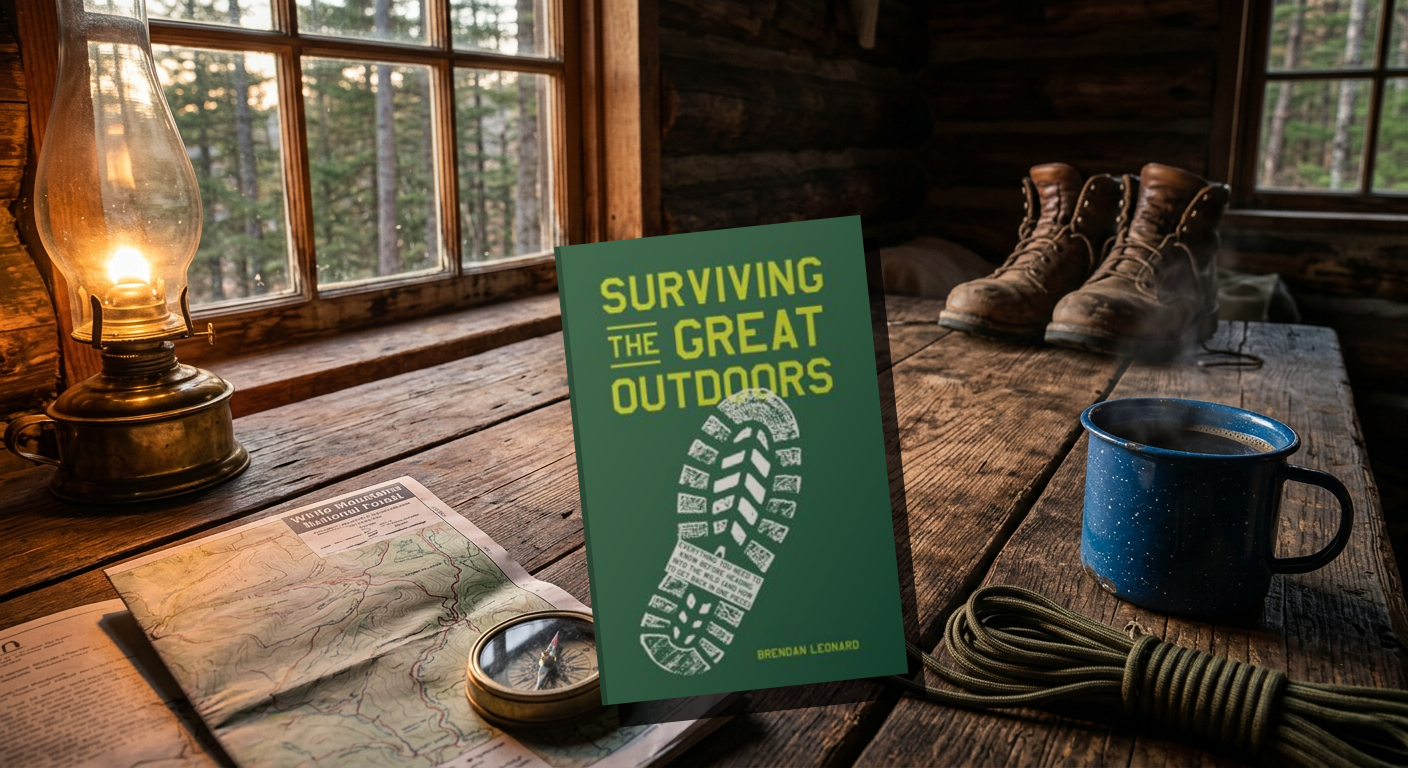
Book Recommendation: Surviving the Great Outdoors by Brendan Leonard
It’s not a prepping book, and that’s exactly why I like it. Brendan Leonard’s Surviving the Great Outdoors packs 400 short, practical lessons into one tough little book that belongs in your truck, your pack, or on the shelf by the back door.
Let me get this out of the way first: this is not a prepping book. Nobody in it is building a bunker or stacking ammo. There are no end-of-the-world scenarios. It’s a book for people who want to go outside, have a good time, and get home in one piece.
And honestly, that’s why I’m recommending it.
A lot of what we call preparedness is really just being competent outdoors. Knowing how to read a map. Knowing how to treat a cut. Knowing what to do when the weather turns or the truck gets stuck. Those skills don’t care whether you learned them from a prepper or a backpacker. They work the same either way.
What the Book Is
The full title is Surviving the Great Outdoors: Everything You Need to Know Before Heading into the Wild (and How to Get Back in One Piece). It was written by Brendan Leonard, an outdoor writer and filmmaker, and published by Artisan in 2019.
It’s about 320 pages and holds 400 short, practical tips. They cover a wide range of outdoor activities: hiking, camping, skiing, sailing and more. Each entry is short and to the point, and a lot of them come with simple line drawings that show you how to do the thing instead of just telling you.
Here’s the detail that sold me: the cover is a waterproof PVC. Whoever designed this book expected it to get rained on, dropped in the dirt, and shoved into a pack. That tells you how it’s meant to be used.
Why a Non-Prepping Book Belongs on a Prepper’s Shelf
Most of us who prep spend a lot of time on stuff: buying it, storing it, rotating it. Skills get less attention because they’re harder to see. You can’t line them up on a shelf and feel good about them.
This book flips that. It’s nearly all skills, explained in plain language for someone who’s new to the outdoors. That makes it good for two kinds of people:
- Beginners who want the basics without a lecture or a lot of fear-based talk.
- Experienced folks who want a fast refresher, or something to hand to a spouse, a kid, or a friend who doesn’t want to read a 600-page survival manual.
The Kind of Stuff It Covers
The range is wide, and a lot of it lines up with skills we talk about on the show all the time. A few examples:
- Reading a topographic map, which matters a lot when your phone dies or loses signal.
- Bandaging a wound, the basic first aid everybody in your house should know.
- Removing a tick the right way, which is a real health issue in a lot of the country.
- Driving on sand and other tricky ground, handy if you ever need to get somewhere off the paved road.
None of that is dramatic. All of it is useful. And that’s the point I keep coming back to: most emergencies aren’t dramatic either. They’re a wrong turn, a bad cut, a storm that came in faster than expected. Knowing the small stuff is what keeps a bad day from turning into a crisis.
How I’d Use It
Don’t just read this book once and put it away. It’s built to be flipped through. Here are a few ways to get more out of it:
- Keep it in the truck. That waterproof cover isn’t just for show.
- Pick one tip a week and actually practice it. Reading about a skill isn’t the same as having it.
- Use it with your kids. Short entries and drawings make it an easy way to teach without it feeling like school.
- Take it camping and test yourself. Can you do what the page says, without looking?
Who Should Skip It
If you’re looking for deep, technical survival training on long-term wilderness living, primitive shelter building, or anything tactical, this isn’t that book. It’s a broad, practical guide, not a specialist manual. Think of it as a good foundation, not the whole house.
The Bottom Line
Preparedness isn’t a separate world from regular outdoor life. It’s the same skills, practiced with a little more intention. Surviving the Great Outdoors is an easy, friendly way to build those skills, and you don’t have to call yourself a prepper to get something out of it.
Grab a copy, toss it in the truck, and learn one new thing this week. That’s how it starts. No fear, no gatekeeping. Just common sense.